How Freeze/Thaw Cycles Destroy Exterior Paint in Illinois
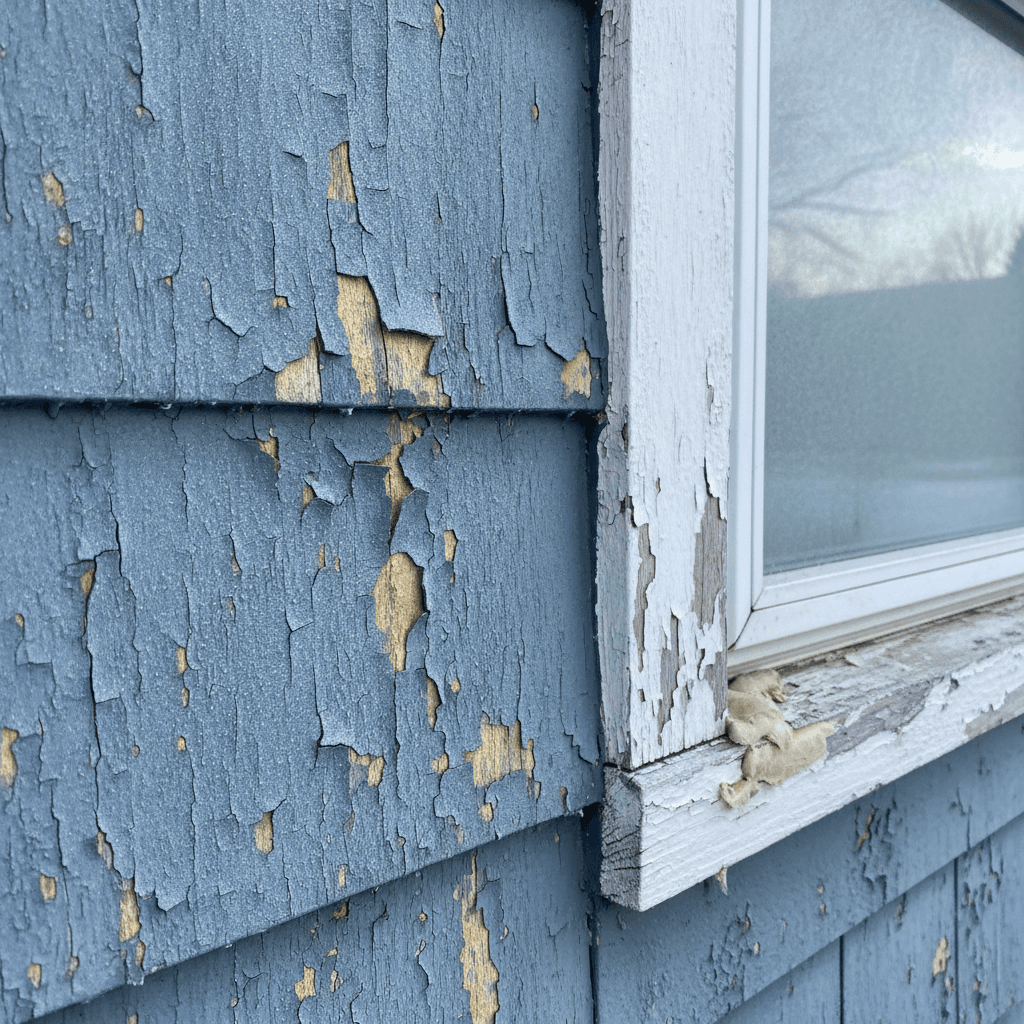
Walk around your house some March afternoon and you might find paint that was fine in October now curling off the trim, caulk lines split open at the windows, and flakes at the bottom of the siding like the house is shedding. Nothing hit it. Nobody scraped it. Winter just did what Illinois winters do.
Here's the mechanism behind it — and, more usefully, the prep work that stops it. This is the stuff we learned to look for the hard way, hiring exterior crews for our own house flips and finding out a couple of winters later which ones had actually prepped.
The physics: water is a crowbar
Water expands about 9% when it freezes. That's the whole story, repeated a few hundred times.
Northern Illinois doesn't have one long freeze — we cross the freezing point dozens of times every winter. A January thaw, a February melt, a 40-degree afternoon followed by a 20-degree night. Each crossing runs the same cycle on your house:
- Meltwater or rain finds a hairline crack in the paint film or a gap in the caulk.
- It soaks in — into the crack, behind the film, into the wood itself.
- Night comes, it freezes, and it expands, prying the crack wider and pushing the paint film off the surface.
- It thaws. More water enters the now-larger opening.
- Repeat, all winter.
A crack you couldn't see in November is a visible split by February and peeling paint by April. Multiply by every joint, seam, nail head, and trim board on the house, and you get spring.
Why some houses shrug it off and others shed
Two houses on the same street, painted the same summer, come out of winter looking completely different. The difference is almost never the paint brand. It's what happened before the paint went on.
House A got real prep: failing paint scraped and sanded to a sound edge, bare wood primed, every joint and gap re-caulked, paint applied in proper curing conditions. The result is a continuous, bonded, flexible film with no easy entry points. Freeze/thaw needs a foothold, and there isn't one.
House B got a "spray and pray" job: a quick powerwash, paint over the old failing film, caulk only where it was obviously missing. It looked identical to House A in September. But paint bonded to loose old paint is only as strong as what's under it, and every unfixed hairline crack came through the new coat within a season. Winter found all of them.
We've owned House B. That's precisely why our company over-indexes on prep.
The warning signs, in order of urgency
Split or missing caulk at windows, doors, corner boards, and trim joints. This is the #1 water entry point and the cheapest thing to fix. If you see gaps, water is already getting in.
Hairline cracking ("alligatoring") in the paint surface — the film has lost flexibility and is opening micro-entries everywhere. It'll peel within a couple of winters.
Peeling at horizontal surfaces first: window sills, trim caps, deck rails, the bottoms of siding boards. Horizontal surfaces hold snow and water longest, so they always fail first. They're your early-warning system.
Bare wood showing. Now it's urgent — unprimed wood absorbs water directly, swells and shrinks with every cycle, and rots. Every month bare wood stays exposed makes the eventual repair bigger.
Rust stains at nail heads. Water is under the film and working on the fasteners.
The prep list that actually stops the cycle
When you're comparing painters, this list is what separates a job that survives Illinois from one that doesn't. Ask specifically whether the quote includes:
- Washing — chalk, dirt, and mildew all prevent bonding
- Scraping and sanding all failing paint back to a firmly bonded edge
- Priming every area of bare or weathered wood — primer is the moisture barrier and the bond coat
- Re-caulking joints, seams, and gaps with quality exterior caulk — not just the visibly failed spots, but the ones that will fail next
- Weather-aware scheduling — surfaces above 50°F, no cold snap during cure, humidity in a workable range
None of this is fancy. It's just slow, and slow is what gets skipped when a crew is racing to the next job. The freeze/thaw cycle is basically a quality-control inspector that works for free and never misses — whatever got skipped, winter will find it.
What to do if winter already got yours
If this spring revealed peeling, splits, and bare wood, two pieces of practical advice:
First, don't wait for it to get worse. Exposed wood and open caulk joints take damage all summer too (rain plus sun), and the repair scope only grows.
Second, book early. Exterior season here runs May through early October, and calendars fill by March. A house that needs winter-damage repair plus a repaint needs a proper scheduling block — the earlier you start the conversation, the better your dates.
We built Level Best Painting around exactly this kind of work: prep-first exterior painting for a climate that punishes shortcuts. If your house came out of winter looking rough — anywhere in Crystal Lake, McHenry, Algonquin, Woodstock, or the surrounding suburbs — we'll walk it with you, show you what winter found, and give you a free written estimate. We return every call within 24 hours.
Thinking about a painting project?
Get a free, no-pressure estimate — we'll call you back within 24 hours.